The U.S. Treasury bond and notes futures markets have sold off markedly this week, which has seen near-term price uptrends negated. Both markets were also headed toward bearish weekly low closes on Friday. The near-term technical postures for the T-Bonds and T-Notes futures have weakened the past two weeks, which suggests still a bit more price pressure in the near term. However, it’s my bias that U.S. Treasury futures prices will coming roaring back, based upon global market fundamentals that still fully favor the U.S. Treasury market bulls. Stay tuned!–Jim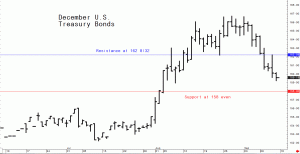
Daily Morning Report
Global Marketplace Upbeat as U.S. and China Appear Conciliatory on Trade War
Friday, September 13–Jim Wyckoff’s Morning Markets Report
Asian and European stock markets were mostly up overnight. Markets in China, South Korea and Taiwan were closed for a holiday Friday. U.S. stock indexes are pointed toward higher openings when the New York day session begins. Trader and investor risk appetite remains upbeat late this week, due in part to reports Thursday President Trump may be interested in an interim trade deal with China. Both the U.S. and China this week have sounded more conciliatory in their ongoing trade war.
The markets are still digesting Thursday’s monetary policy meeting of the European Central Bank saw the bank significantly ease its monetary policy. The ECB lowered interest rates by 0.1%, to minus 0.5%, and also announced a new “quantitative easing” bond-buying program, which is the largest in over three years. The Federal Reserve’s FOMC meets next week and is expected to cut U.S. interest rates by 0.25%. Reports today said Japan may be looking to further stimulate its moribund economy.
The key “outside markets” today see Nymex crude oil prices near steady and trading around $55.15 a barrel. The U.S. dollar index is lower in early U.S. trading today.
U.S. economic data due for release Friday includes retail sales, import and export prices, manufacturing and trade inventories, and the University of Michigan consumer sentiment survey.
–Jim
Risk Appetite Remains Elevated Late this Week; ECB Decision Awaited
Thursday, September 12–Jim Wyckoff’s Morning Markets Report
Asian stock markets were mostly up overnight, while European stock indexes were mostly weaker. U.S. stock indexes are pointed toward firmer openings when the New York day session begins. Trader and investor risk appetite remains generally elevated late this week.
The trade tensions between the world’s two largest economies—the U.S. and China—have ratcheted down a notch this week. The U.S. has announced the slight delay of implementation of some tariffs on China that were set to take effect October 1. This follows the move by China this week to exempt some U.S. products from their own tariffs. Both sides are set to hold talks in October. Reports today said China is looking to narrow the scope of the negotiations to trade only—leaving out other matters that have been sticking points, such as national security.
Focus today is on the soon-to-conclude monetary policy meeting of the European Central Bank, at which time the ECB is expected to announce only a very slight interest rate cut, pushing rates further into negative territory. The Federal Reserve meets next week and is expected to cut U.S. interest rates by 0.25%. President Trump on Wednesday called the Federal Reserve “boneheads” for not lower interest rates faster and farther.
The U.S. economic highlight of the day Thursday is the consumer price index report for August, expected to come in at up 0.1% from July and up 1.8%, year-on-year.
The key “outside markets” today see Nymex crude oil prices lower and trading around $55.50 a barrel. Thursday sees a meeting of the OPEC oil cartel. The U.S. dollar index is weaker in early U.S. trading today.
Other U.S. economic data due for release Thursday includes the weekly jobless claims report, real earnings and the monthly Treasury budget statement.
–Jim
Nymex Crude Oil Prices Trending Up
The Nymex crude oil futures market is trending higher and has this week hit a five-week high. Bulls have gained upside momentum recently to now suggest a challenge of psychological resistance at $60.00 and even above that level. Stay tuned!–Jim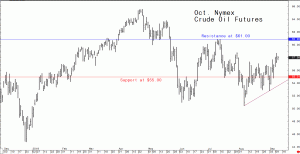
Apparent Thawing in U.S. China-Trade Tensions Boosting Trader/Investor Appetite at Mid-Week
Wednesday, September 11–Jim Wyckoff’s Morning Markets Report
Asian and European stock markets were mostly up overnight. U.S. stock indexes are also pointed toward mixed openings when the New York day session begins. Generally, there remains low risk aversion in the world marketplace at mid-week. China has made a positive overture to the U.S. regarding trade when it said it will exempt certain U.S. products from tariffs for one year. This week the U.S.-China trade tensions have appeared to ratchet down a notch.
Focus is turning to the monetary policy meeting of the European Central Bank on Thursday, at which time the ECB is expected to only very slightly cut interest rates, pushing them further into negative territory. The Federal Reserve meets next week and is expected to cut U.S. interest rates by 0.25%.
The key “outside markets” today see Nymex crude oil prices higher and trading around $58.00 a barrel. Thursday sees a meeting of the OPEC oil cartel. Oil prices have rallied recently on ideas OPEC nations will continue to constrict their spigots. OPEC today cut its world oil demand growth forecast to 1.02 million barrels per day for 2019. The U.S. dollar index is higher in early U.S. trading today.
U.S. economic data due for release Wednesday includes the weekly MBA mortgage applications survey, the producer price index, monthly wholesale trade and the weekly DOE liquid energy stocks report.
–Jim
World Stocks Markets Pausing Ahead of Central Bank Meetings
Tuesday, September 10–Jim Wyckoff’s Morning Markets Report
Asian and European stock markets were narrowly mixed overnight. U.S. stock indexes are pointed toward modestly lower openings when the New York day session begins.
In overnight news, China’s consumer price index rose 2.8% in August, year-on-year, which was the same rate as July. The rise was more than expected and was led by surging pork prices. China’s producer prices were down 0.8% in August, year-on-year, due in part to the negative effects of China’s trade war with the U.S. China’s central bank eased its monetary policy last week and is likely to do it again in the near term.
Focus is turning to the monetary policy meeting of the European Central Bank on Thursday, at which time the ECB is expected to cut interest rates, pushing them further into negative territory. The FOMC meets next week.
The key “outside markets” today see Nymex crude oil prices slightly firmer and trading around $58.00 a barrel. Thursday sees a meeting of the OPEC oil cartel. Oil prices have rallied recently on ideas OPEC nations will continue to constrict their spigots. The U.S. dollar index is firmer in early U.S. trading today.
U.S. economic data due for release Tuesday is light and includes the weekly Goldman Sachs and Johnson Redbook retail sales reports, and the NFIB small business index.
–Jim