The Nymex crude oil futures market on Monday plumbed an 18-year low of $19.92 a barrel, amid the global coronavirus outbreak that has severely reduced demand for energy. Throw in an oil-price war between major producers Saudi Arabia and Russia and you get oil prices in the teens. Oil prices are not likely at all to stay in the teens for an extended period of time. History shows that steep oil price downdrafts see fairly fast rebounds, as in weeks and not months. Stay tuned! Jim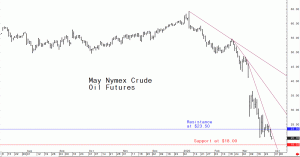
Daily Morning Report
Trader/investor appetites turn from panic do gloom
Monday, March 30–Jim Wyckoff’s Morning Markets Report
Global stock markets were mostly weaker in overnight trading. U.S. stock indexes are pointed toward mixed openings when the New York day session begins. Traders and investors are entering another week uncertainty, as the mood of the marketplace has turned from panic to gloom. U.S. President Trump on Sunday extended the shutdown of most U.S. retail businesses and schools by another 30 days, to April 30. The U.S. can expect a best-case scenario of around 100,000 to 200,000 deaths and millions infected with the illness, said the top U.S. health official over the weekend.
As the first quarter comes to an end Tuesday, market watchers are wondering how many companies and individuals hurt by the coronavirus outbreak can pay their bills, including a domino effect occurring on the matter as the global economy seizes up. Also in question are the major credit ratings agencies and how they will deal with the many big companies that are in a serious financial bind. It’s tough to be a buyer of any markets at all in these conditions, and with the ultimate ramifications of the Covid-19 outbreak still so uncertain.
The important outside markets today see Nymex crude oil prices weaker and hitting an 18-year low of $19.92 a barrel overnight. The U.S. energy industry has shuddered the past three weeks, which has led to much of the selling pressure in the stock market. The U.S. dollar index is higher on a corrective bounce after last week’s strong losses. The 10-year U.S. Treasury note yield is trading around 0.64% Monday morning–well down from last week’s levels.
U.S. economic data due for release Monday includes pending home sales and the Texas manufacturing outlook survey.
–Jim
Continue Reading
U.S. stock indexes pull back early Friday, but still a good week for bulls
Global stock markets were mixed to firmer in overnight trading, following the big U.S. stock market gains Thursday. U.S. stock index futures are presently pointed toward lower openings when the New York electronic day session begins, on a corrective pullback following this week’s very strong gains. The S&P 500 stock index is up almost 20% from its low seen Monday. The global equity markets have been boosted in part as the U.S. Congress is on the verge of passing a $2.2 trillion financial aid package for U.S. businesses and citizens. However, any trader/investor watching the evening national news cannot come away with a good feeling, as the U.S. has passed all other countries in Covid-19 cases and New York’s health care system is in crisis and straining to keep up with coronavirus cases. Other states are also seeing an alarming rise in new Covid-19 cases.
Heading into another uncertain weekend, its likely traders and investors are not going to be in hearty buying moods. Still, if the U.S. stock indexes can avoid major losses Friday, then this week’s strong gains in the U.S. indexes do begin to suggest they have put in market bottoms.
The important outside markets today see Nymex crude oil prices near steady and trading around $22.50 a barrel. The U.S. dollar index is firmer on a mild corrective bounce after this week’s strong losses. The 10-year U.S. Treasury note yield is trading around 0.075% Friday morning, down from Thursday’s level.
U.S. economic data due for release Friday includes personal income and outlays and the University of Michigan consumer sentiment survey.
–Jim
Continue Reading
U.S. traders/investors brace for dour weekly jobless claims report
Thursday, March 26–Jim Wyckoff’s Morning Markets Report
Global stock markets were mostly lower in overnight trading. U.S. stock index futures are presently pointed toward lower openings when the New York electronic day session begins. The equity markets are ignoring the overnight news the U.S. Senate has passed a $2.2 trillion financial aid package for U.S. businesses and citizens negatively impacted by the Covid-19 outbreak. The measure was expected to be passed and now moves to the House of Representatives for a vote.
Now, traders and investors are squarely focused on Thursday morning’s weekly jobless claims report, which is expected to show an enormous and record-setting rise of 1.5 million claims, or more, in the latest reporting week. This weekly report will be the first one to more fully reflect a U.S. economy that has been severely crippled by the closure of most retail stores across the nation due to the coronavirus outbreak that continues to spread rapidly in the U.S. The jobless claims report will very likely be a grim testament to the damage being inflicted on the world’s largest economy. Such could put more downside price pressure on the U.S. stock indexes during the day session Thursday.
The important outside markets today see Nymex crude oil prices down and trading around $23.85 a barrel. The U.S. is pressuring Saudi Arabia to hold off on producing more oil that is helping to cripple the U.S. economy. It’s doubtful the Saudis will listen as they hate the U.S. fracking industry. The U.S. dollar index is again solidly lower as greenback bulls are fading fast after the USDX hit a 17-year high earlier this week. The 10-year U.S. Treasury note yield is trading around 0.81% Thursday morning.
Other U.S. economic data due for release Thursday includes the third estimate of four-quarter GDP, advance economic indicators, and the Kansas City Fed manufacturing survey.
–Jim
Gold bulls back in business–looking for still more upside
The gold market shot sharply higher early this week, amid safe-haven demand in an uncertain world at present. Look for new for-the-move highs in the coming weeks, or soon–and importantly amid high volatility. Stay tuned! Jim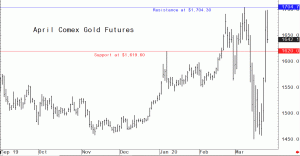
Gold bugs still buzzing Wednesday, after wild price action Tuesday
Wednesday, March 25–Jim Wyckoff’s Morning Markets Report
Global stock markets were mostly higher in overnight trading. U.S. stock index futures are presently pointed toward mixed openings when the New York electronic day session begins. The equity markets are buoyed by news the U.S. Congress has agreed to a $2 trillion financial aid package for U.S. businesses and citizens so negatively impacted by the Covid-19 outbreak. News reports said the U.K.’s Prince Charles has tested positive for Covid-19.
Given Tuesday’s record gains in the U.S. stock indexes, many traders and investors are now wondering if the bottoms are in place for the U.S. stock indexes, which dropped into bear market territory at the fastest rate ever over the past three weeks. Some of the big shots on the TV business news channels are saying “not yet. It’s too early.” Those big shot TV commentators being in general agreement on that matter makes at least a few long-time market watchers think they might be wrong, because they usually are.
Metals traders are still buzzing about the wild price action in the gold futures and London cash (spot) market Tuesday. April Comex gold futures shot sharply higher Tuesday morning amid keen trader concern that London spot gold price quotes had become unreliable or had been halted. U.K. market-makers had ostensibly shut down as gold mines around the globe have curtailed operations due to the Covid-19 outbreak. With the U.K. government-ordered lock-down, many gold market makers were working from home Tuesday, creating even more confusion. The big gold traders in Europe who normally would base their trading decisions on the London spot gold price got spooked when the London spot price was “way out of whack” to the gold futures price—at as much as a $100.00 discount to Comex gold futures at one point early Tuesday morning. The confusion in the London spot market prompted the big European metals traders to rush to buy Comex gold futures as a hedge, as they felt they could not get what they felt were accurate or fair London spot gold prices. Also, there have been many reports the supply of physical gold bullion worldwide is hard to come by. That led to ideas Comex futures traders long (buyers) the gold market in the nearby contracts could hold their positions into expiration of those contracts and thereby take delivery of physical gold, per futures contract specifications. The credibility of this notion was bolstered late Tuesday evening when the London Bullion Market Association (LBMA) and major banks asked CME Group (parent company for Comex) to change physical delivery specifications for gold futures contracts to allow 400-ounce bars of gold, which is the standard for London traders. Currently, CME only allows 100-ounce bars to be delivered. Then later Tuesday evening the CME Group came out and announced a whole new gold futures contract was created, which would allow both 400-ounce and 100-ounce bars acceptable for delivery. The new gold futures contract, if approved by regulators, would start to trade in a few weeks. The upshot of this matter for all traders of all markets is that the London spot gold market had operated efficiently for over 150 years—until Tuesday. Such are the times we are experiencing at present.
The important markets today see Nymex crude oil prices slightly down and trading around $23.65 a barrel. The U.S. dollar index is sharply lower again after hitting a 17-year high on Monday. The 10-year U.S. Treasury note yield is trading around 0.85% Wednesday.
U.S. economic data due for release Wednesday includes the weekly MBA mortgage applications survey, durable goods orders, the weekly DOE liquid energy stocks report and the monthly house price index.
–Jim
Continue Reading