Friday, May 10–Jim Wyckoff’s Morning Markets Report
World stock markets were mostly up overnight. U.S. stock indexes are pointed toward narrowly mixed openings when the New York day session begins.
There was no eleventh-hour trade agreement reached between the U.S. and China late Thursday. Increased U.S. tariffs on imported Chinese goods went into effect at midnight last night. China has vowed retaliation. Interestingly, China’s stock market posted a solid rally Friday after this news. It could be a classic case of “sell the rumor, buy the fact” regarding the matter. The U.S.-China trade talks will continue in Washington today. It could also be that the Asian stock market rally Friday was due in part to optimism a deal can be reached soon, as the two sides are still talking. Also, President Trump said China President Xi sent him a “beautiful letter” this week and that the two may talk soon on the matter.
Focus in early U.S. trading today will be on the U.S. consumer price index report for April, which is expected to come in at up 0.4% from March and up 2.1%, year-on-year. A theme in the world marketplace in recent months has been very tame inflation coming out of the major economies.
The U.S.-China trade conflict has this week mostly overshadowed another potential geopolitical flashpoint. Iran’s government said this week it will stop complying with some commitments it made in the United Nations nuclear deal in 2015. The U.S. has a naval task force steaming to the Persian Gulf, including an aircraft carrier, due to what the U.S. says are threats against the U.S. in the region.
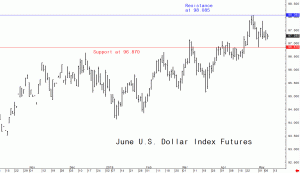
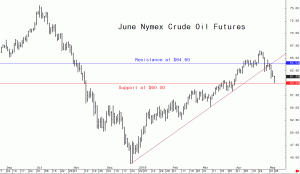
The key “outside markets” today see the U.S. dollar index near steady. Meantime, Nymex crude oil prices are firmer and trading just below $62.00 a barrel.
Other U.S. economic data due for release Friday includes real earnings, and the monthly Treasury budget statement.
–Jim